

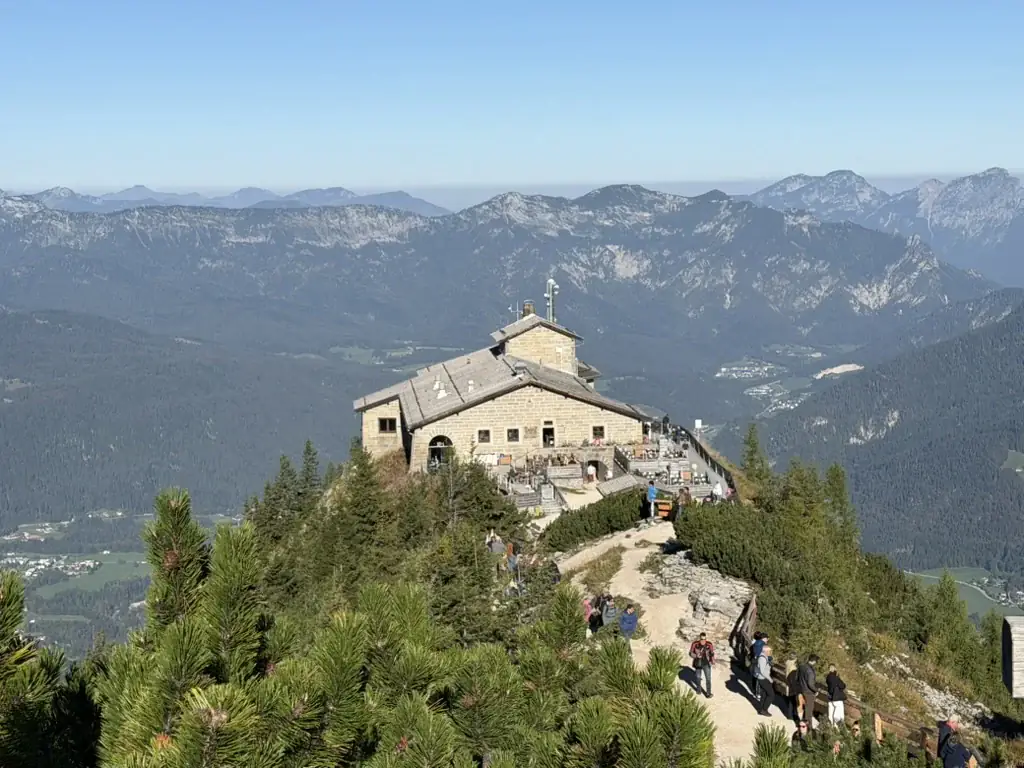
A long-held wish
The Kehlsteinhaus, also known as the Eagle’s Nest, had been on my list of places I wanted to see for years. My interest in the Second World War goes back a long way and comes from historical curiosity, certainly not admiration. How could it all have happened? Which events and decisions led to one of the darkest periods in our history?
I owe much of that interest to my father. He sparked my curiosity about history when I was young. He died in 2013. I would have loved to visit the Kehlsteinhaus with him: walking round, talking about the history and seeing with our own eyes what we only knew from books, documentaries and films. It never happened. That gave this day a personal meaning for me, and I was glad I could share it with Lynn.
An early start to the Obersalzberg
During our holiday we stayed in Inzell, in Bavaria. From there we set aside a day for the Kehlsteinhaus, the site of the former Berghof and the documentation centre on the Obersalzberg.
To beat the crowds, we took the first bus of the morning. As so often, we were far too early. The Obersalzberg was still quiet, there was plenty of parking and there was no sign yet of the large groups that would arrive later in the day. We put our walking boots on straight away, as we didn’t yet know how much walking we would do at the top.
Special buses run along the Kehlsteinstraße, a road of around 6.5 kilometres built in the 1930s specifically for the Kehlsteinhaus. The ride itself was quite an experience: the road winds along steep slopes and through tunnels, and the mountains open up more and more as you climb.
Through the mountain by lift
For the last stretch you can walk up a path or take the historic lift that runs straight through the mountain. We chose the lift.
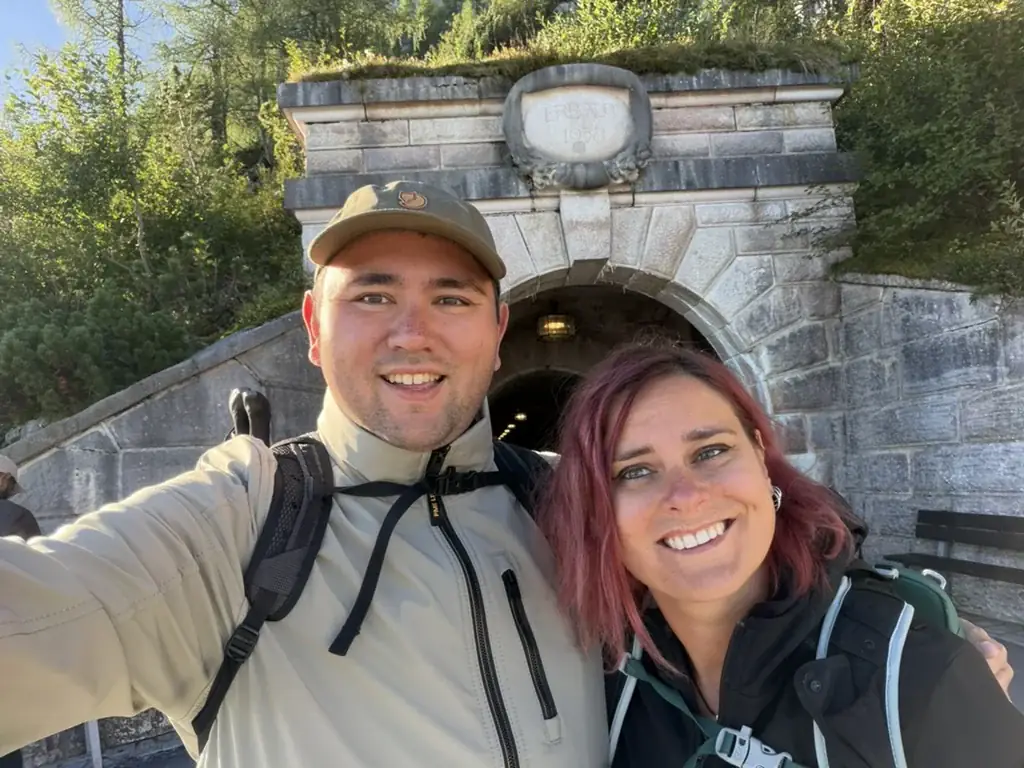
First you walk through a 124-metre tunnel deep into the mountain. At the end is the lift, its interior largely lined with polished brass. I had been looking forward to this. I knew the tunnel and the lift from countless historical photographs and documentaries.
The lift takes you about 124 metres up, straight into the Kehlsteinhaus. It is a remarkable piece of engineering from 1938 that has kept its historic character despite several modernisations. We weren’t able to take photos inside. A shame, as I would have liked to show it.
A building with a troubled past
When we stepped out of the lift into the Kehlsteinhaus, my first thought was surprisingly simple: I’d expected it to be bigger. All the images had led me to picture a much larger building. In reality it is fairly compact. That made it no less interesting.
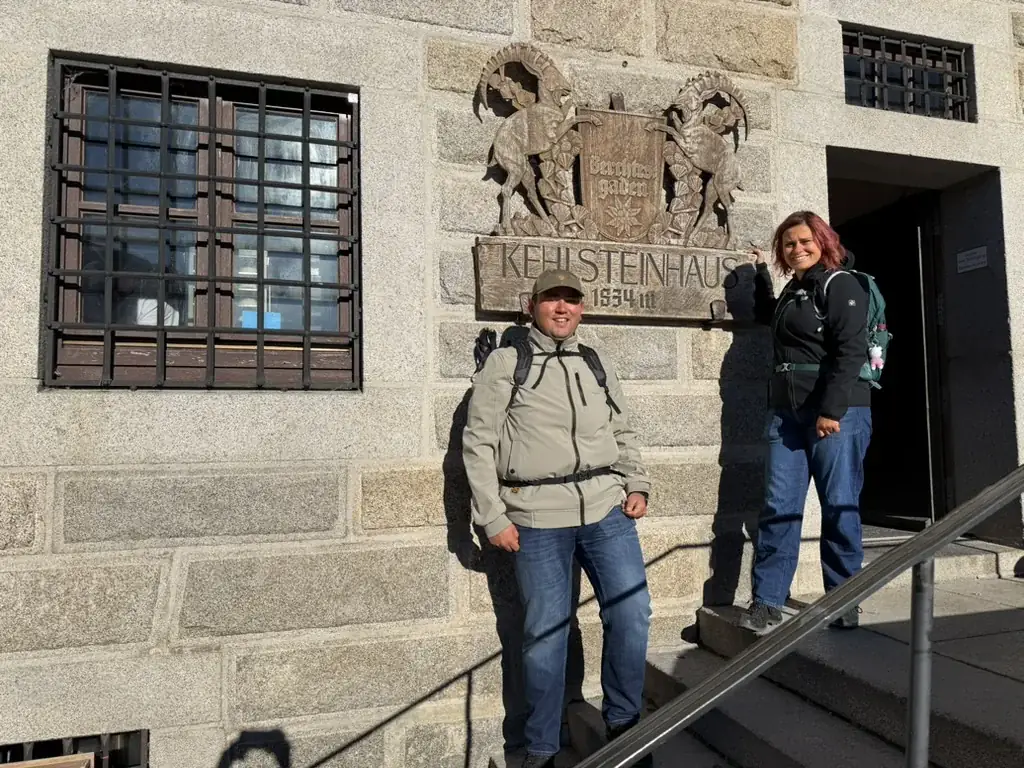
We walked slowly through the dining room, out onto the terrace and past the fireplace. The Kehlsteinhaus was built in 1938 on the orders of Martin Bormann, as an official reception building for the Nazi regime. Hitler rarely came here and the big decisions were made elsewhere, but it was part of the complex of power on the Obersalzberg. Further down the mountain lay the Berghof.
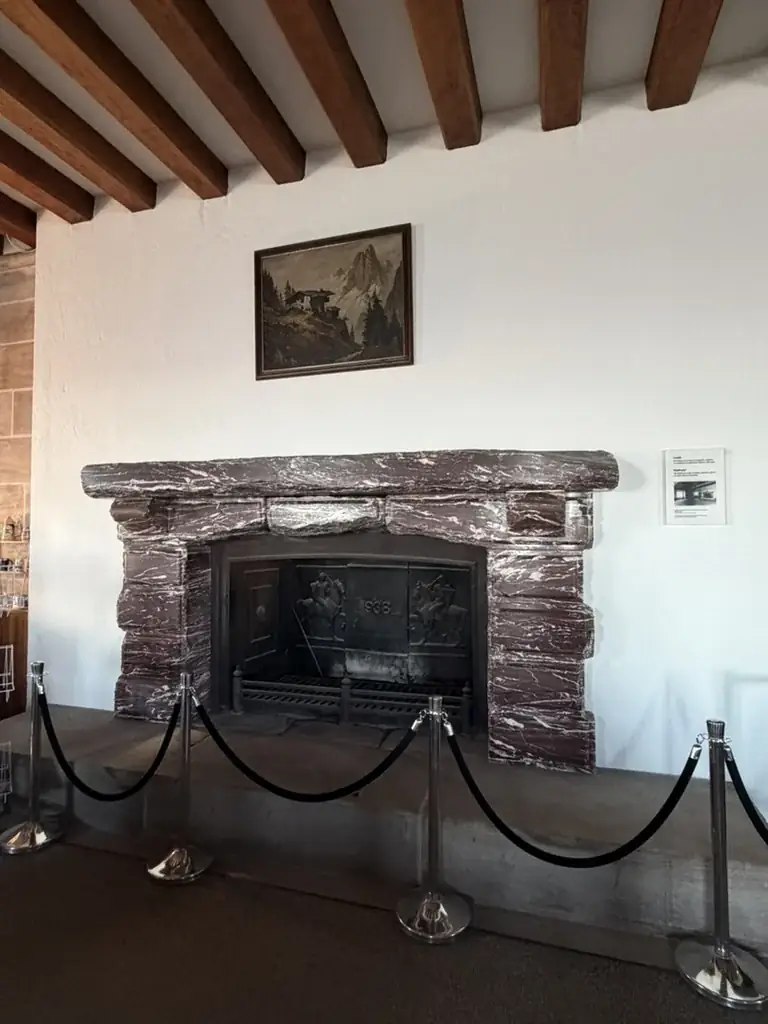
It was a strange feeling to walk around here. You are standing in a building linked to a regime responsible for war, persecution and the deaths of millions of people, and at the same time you look out of the windows over a magnificent mountain landscape. I often stopped for a moment to take in what I was seeing.
In that moment I thought of my father, and it moved me more than I had expected. That is what makes visiting historical places worthwhile for me. You can read about them and watch documentaries, but being there yourself is a different experience.
Walking around the Kehlsteinhaus
After the building, we wanted to explore the surroundings. We followed one of the paths that lead from the Kehlsteinhaus further into the mountains and soon left the crowds behind. Narrow paths, rocky stretches and wide views: exactly the kind of landscape Lynn and I enjoy walking in.
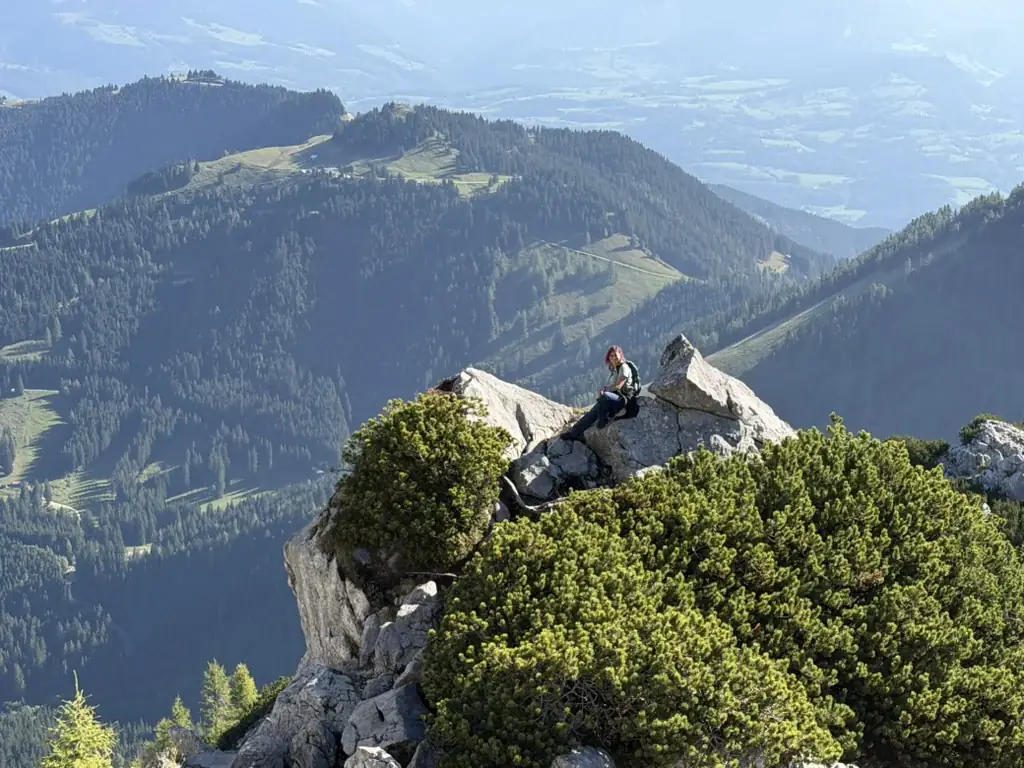
After a good while, the route climbed further over the rocks. That was where it really started to be fun for us: a bit of climbing and scrambling, stopping now and then to look around. What scenery.
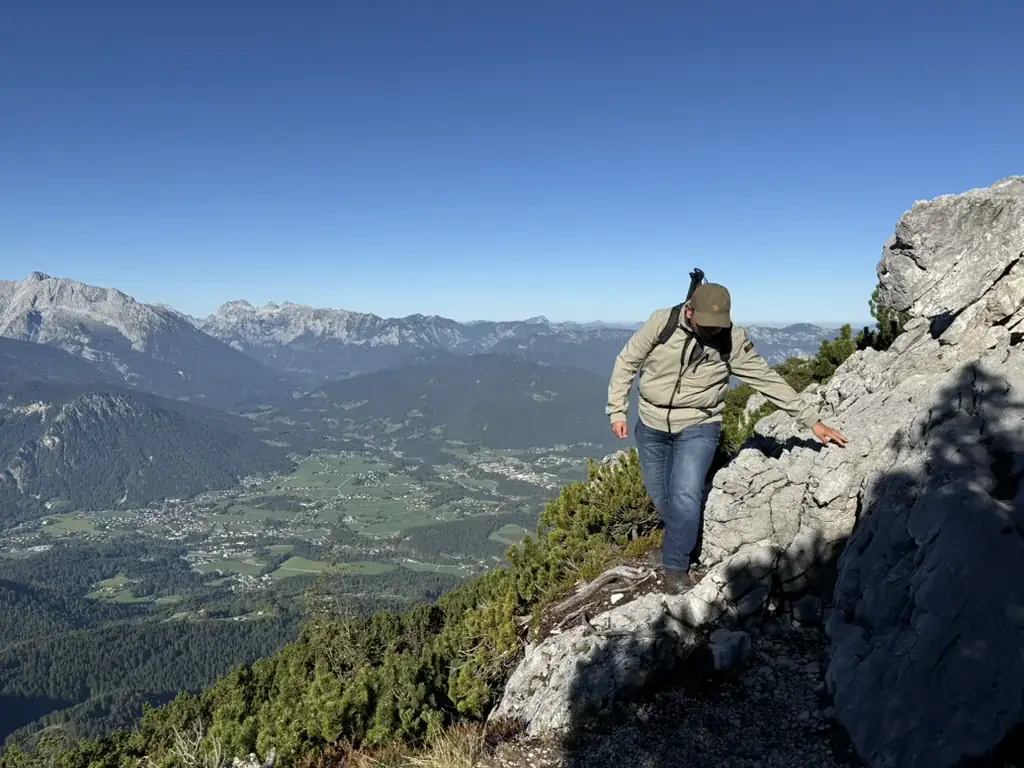
We would have liked to carry on to the next summit, but we had more planned for the day. We kept to the first part of the route and, after a bit more scrambling, walked back to the Kehlsteinhaus.
Warming up with hot chocolate
The sun was out, but it was chilly at the top. It was below ten degrees, and the cold wind made it feel even colder. A hot chocolate and a slice of cake were more than welcome, and Dribbel and Misty had naturally come along too.
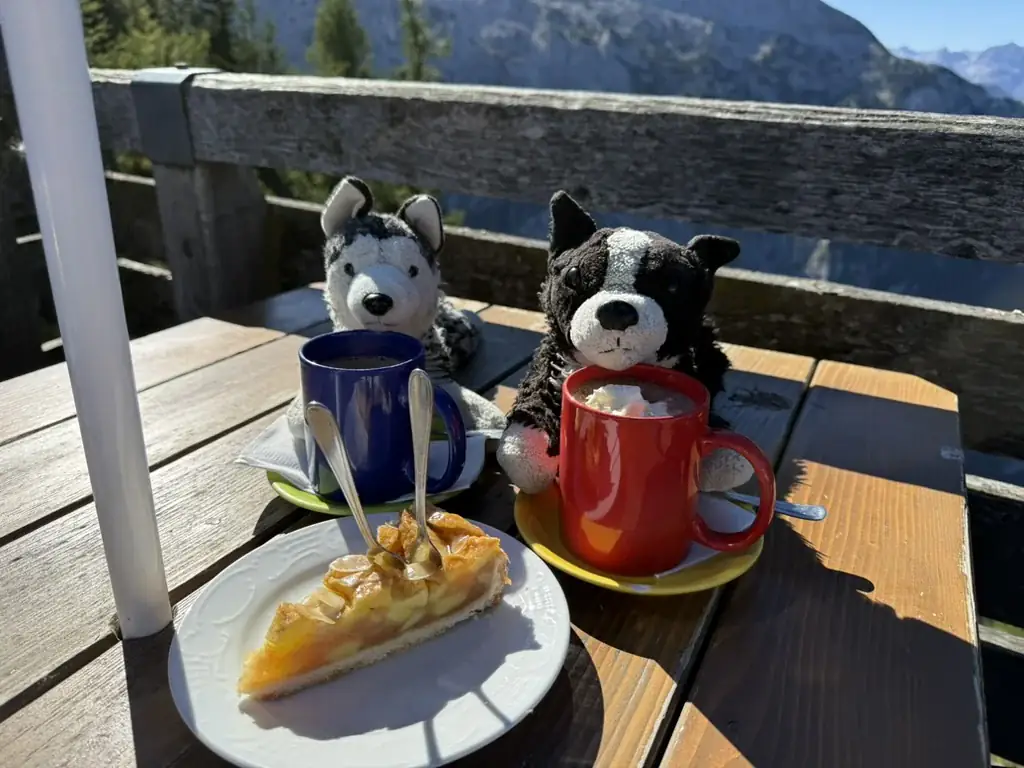
After our break we took the path down to the bus stop instead of the lift. The bus took us back to the Obersalzberg for the next part of the day.
Looking for the former Berghof
For me, a visit to the Obersalzberg wasn’t complete without the site of the Berghof, the country residence where Hitler spent a great deal of time in the 1930s and during the war. Unlike the Kehlsteinhaus, this was an important place within the regime. Hitler received political leaders and diplomats here, and talks were held that had far-reaching consequences for Europe.
The site is barely marked and there are hardly any signposts. I had a rough idea of where the Berghof had stood, and with the help of navigation we found it. Almost nothing of the building itself remains.
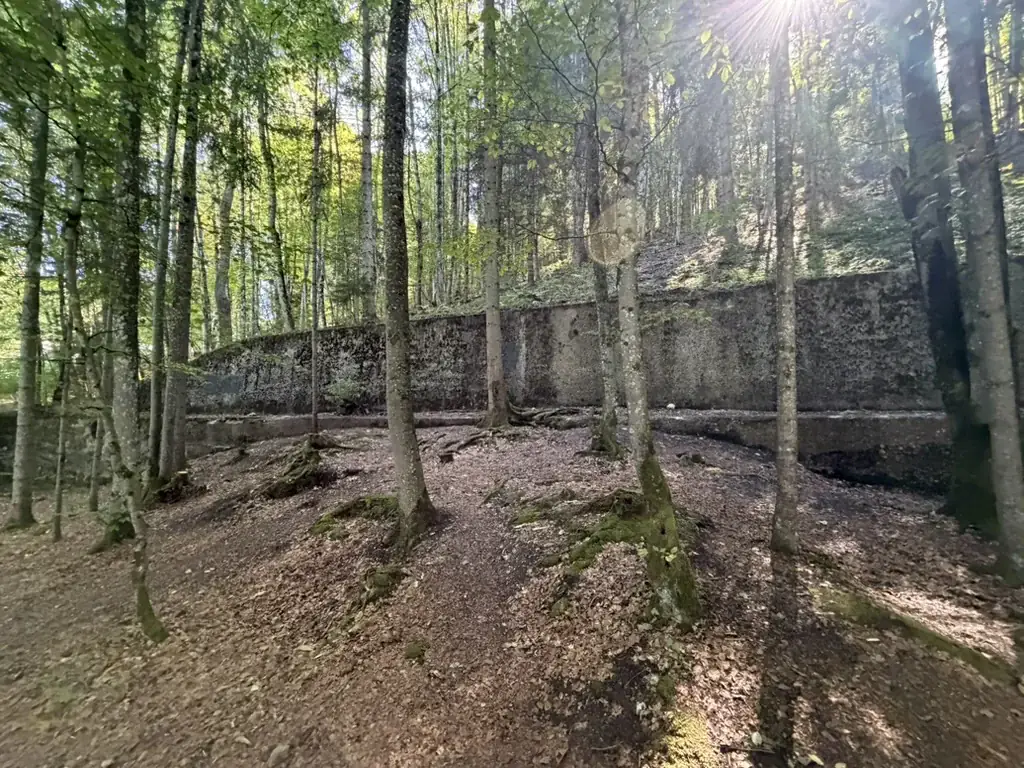
There is a reason for that. The Berghof started out as a smaller country house that Hitler rented in 1928 and bought in 1933. It was then extended into the large residence you see in historical photographs. A British air raid on 25 April 1945 badly damaged it, and a few days later the SS set it on fire. In 1952 the ruins were blown up on the orders of the American military authorities. What remains is part of the retaining wall on the southern slope. The information board at the site says so too.
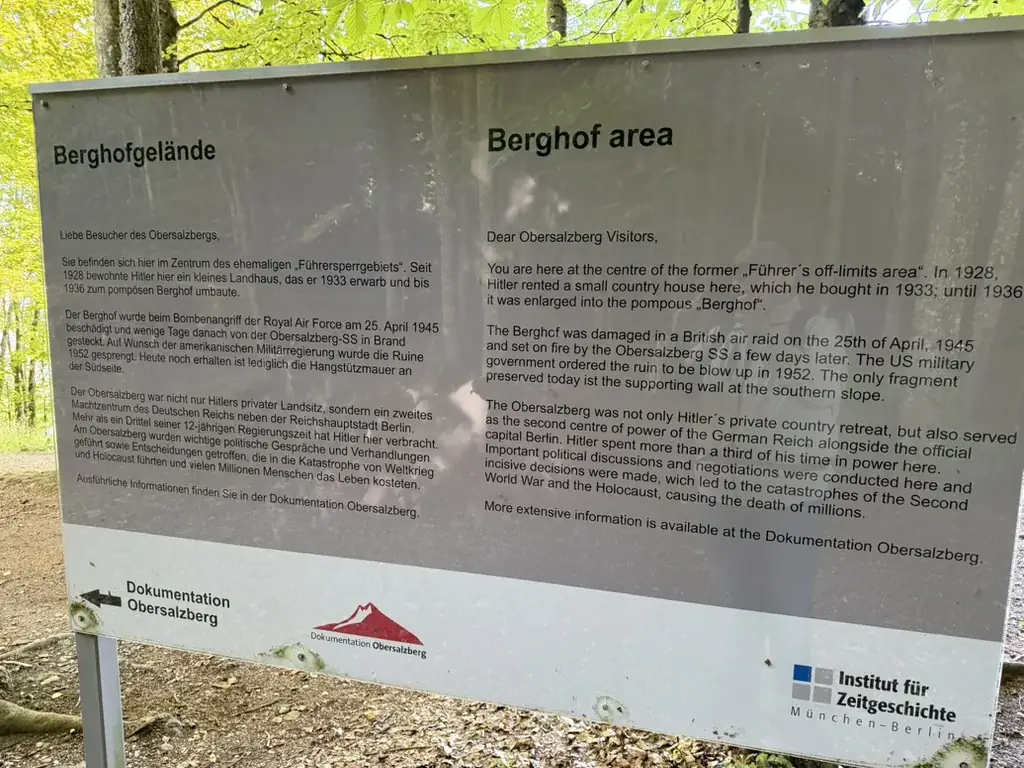
Where a large building once stood, trees and bushes now grow. Without knowing the history, you probably wouldn’t realise what happened here. Only when you hold old photographs up against the surroundings do you recognise where it stood. I understand the restraint around this place. The history has to keep being told, without the site turning into a place where the Nazi regime is glorified.
Dokumentation Obersalzberg
The documentation centre, the Dokumentation Obersalzberg, was a good way to finish. The permanent exhibition shows how the Obersalzberg changed from a quiet mountain community into a centre of power for the Nazi regime. It looks in detail at the rise of National Socialism, propaganda, the war and the persecution and murder of millions of people.
What I found particularly interesting is that the exhibition looks beyond the well-known events. It also covers the original inhabitants of the area, the changes the regime brought about and how the area developed after the war. That gives you a much fuller picture. The museum is modern, with a wealth of information, historical documents and images.
Part of the underground bunker system is open to visitors. The atmosphere there is very different from the top of the mountain: you walk through passages between concrete walls that were part of the complex. We took our time there.
I can’t publish my own photos of the museum: photography for private use is allowed, but further conditions apply to publication. If you visit the Kehlsteinhaus yourself, make time for the documentation centre as well. It gives you the context to understand what happened here.
A day that will stay with me
As we walked back to the car at the end of the day, I was still struck by everything we had seen. The Kehlsteinhaus had been on my list for years, and the day affected me more than I had expected. That was partly to do with my father, whom I missed that day.
At the same time, I’m glad I experienced it with Lynn. We visited historical sites and walked through the scenery of the Bavarian Alps.
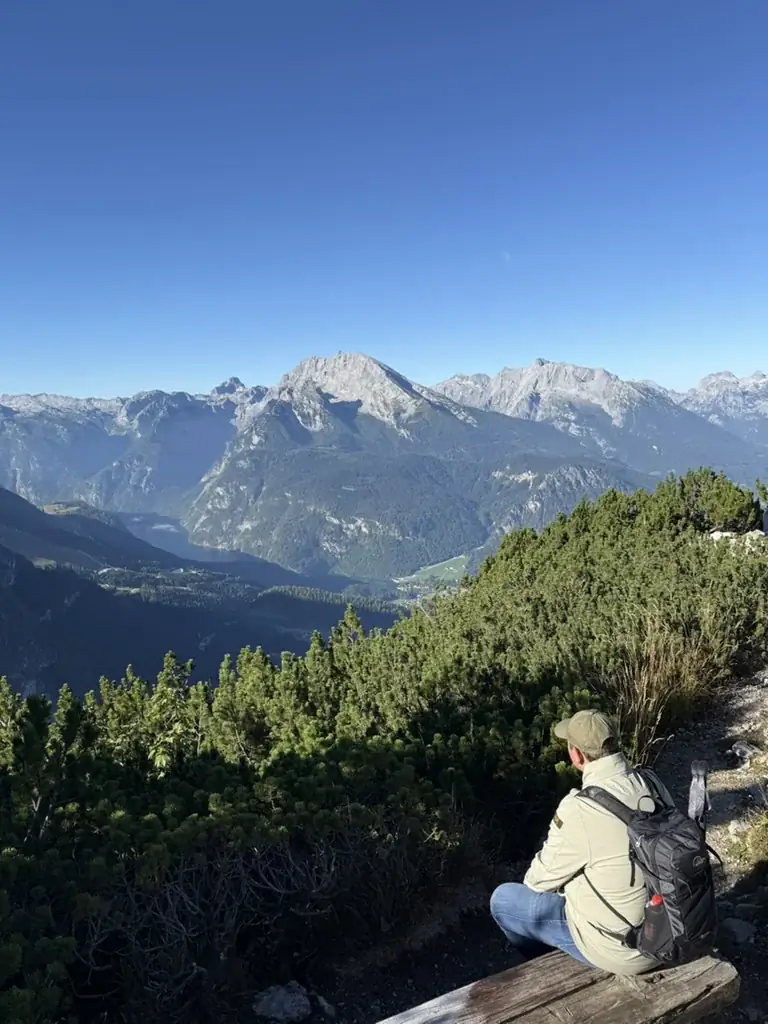
What I will remember most is how close those two worlds lie to each other. A landscape that now radiates peace and beauty was once the backdrop to one of the darkest chapters in our history.
Will Lynn and I go back? I’m sure we will. We still owe ourselves a walk to the next summit.