

My first memories of the blood bank begin on the back of my father’s bike. We didn’t have a car, so rain or shine, we cycled. I didn’t have to come along at all, but I always wanted to. Once I was old enough to ride my own bike, I cycled next to him. From our house it was about a forty-minute ride.
I loved it there. The people were friendly, the nurses always made a bit of time for me, and there were piles of magazines and comic books. But the very best part was the roze koeken, the pink iced cakes. Sometimes I even got a little bandage around my arm, so it looked as if I had given blood too. I wore it with pride.
That is how a visit to the blood bank became our regular father-and-son outing. If we were lucky, we went for steppegras afterwards. For anyone who doesn’t know it: a huge pile of paper-thin fries, with a schnitzel hidden somewhere underneath. As a child, I could hardly imagine a better day.
What I didn’t understand back then was why my father spent so long lying at that machine. He wasn’t donating blood, he told me, but plasma. When you donate plasma, a machine separates the plasma from your blood and you get the rest back. That happens in several rounds, which makes a donation like that take quite a bit longer than simply giving blood. For me, it mostly meant extra time to read comic books.
Only much later did I ask him why he had started donating in the first place. His answer was as matter-of-fact as ever: during his military service, you got a day off if you went to give blood. Whether he went mainly for that at the time, or because he wanted to do something good, I’ll leave open. What started that way, he kept doing for years.
When I turned eighteen, I was finally allowed to donate myself. The first time I gave blood, as was usual back then, and later I switched to plasma. Just like my father.
Suddenly I was no longer a child waiting next to him; we were donating together. Two donors side by side. We did that together for a very long time, until in the last years of his life he was no longer allowed to donate for health reasons.
I kept going on my own for a while, but it felt different. For me, the blood bank had always been something we did together. Without him, part of what made it so special disappeared. In the end, I stopped as well.
After he passed away, I started donating again. Maybe because it was a way to hold on to something of him. Maybe because, after all that time, it had simply become part of me. Probably a bit of both.
I still enjoy going to the blood bank. The thought that my plasma is used to make medicines for people who badly need them gives me a good feeling. Something that takes relatively little effort for me can mean a lot to someone else.
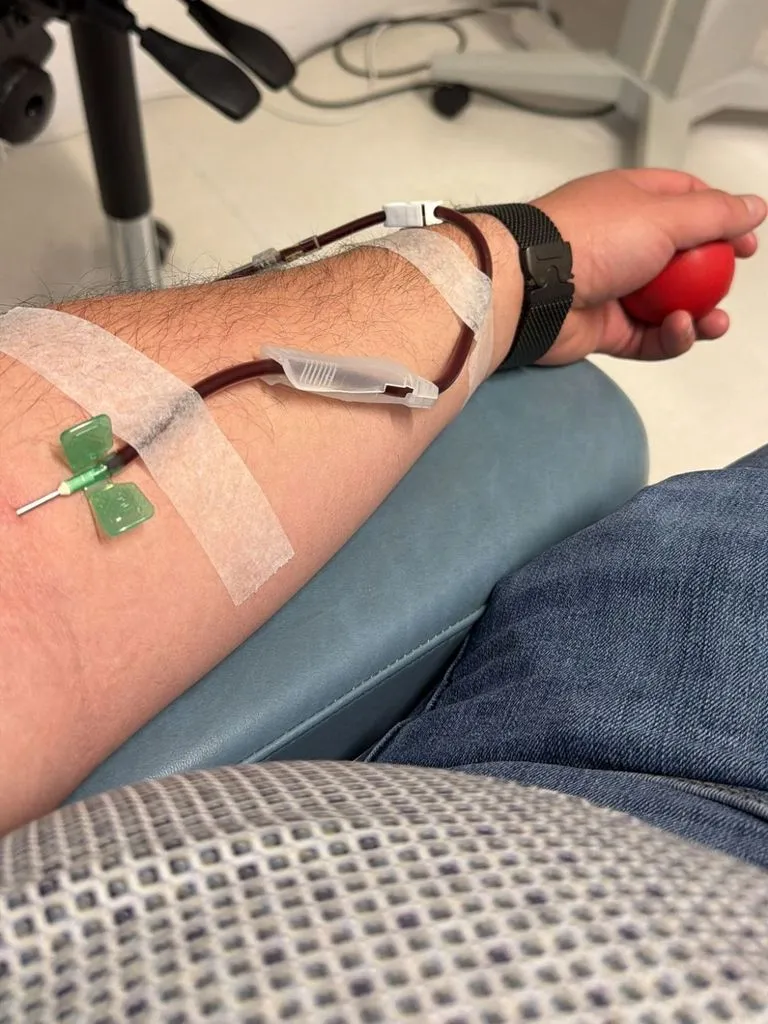
These days I no longer have to go alone. My wife Lynn donates too. What once began as an outing for father and son is now something we do together. I haven’t needed a fake bandage on my arm for a long time. The pink cake, on the other hand, is still my favourite.
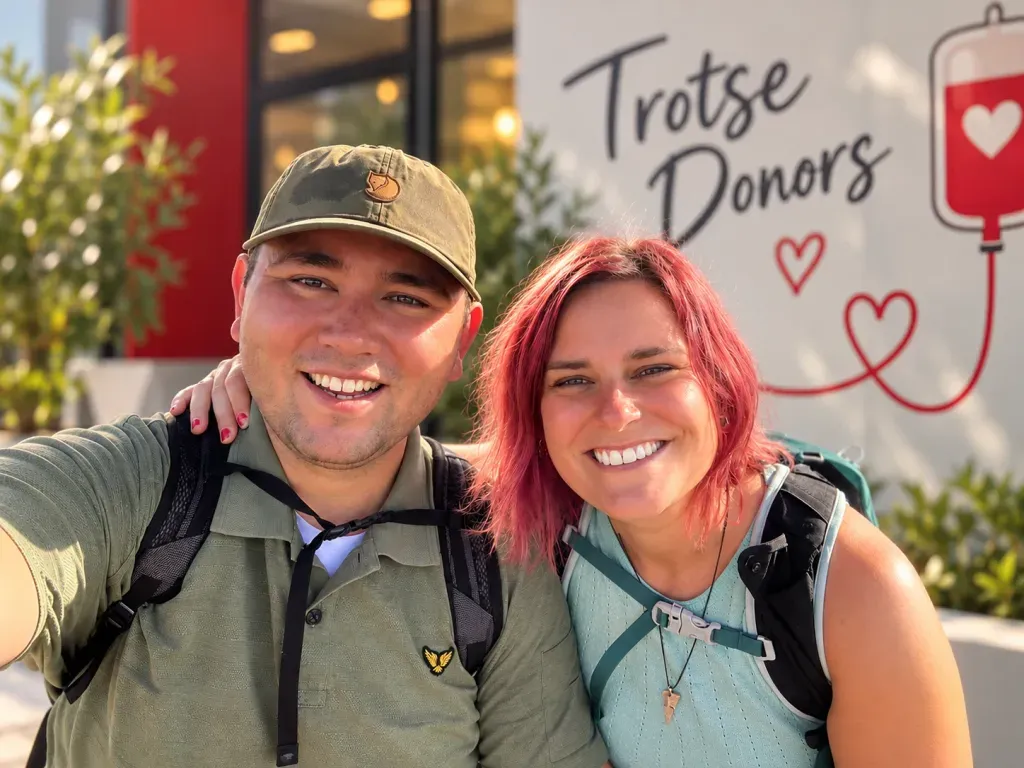
And sometimes, when I’m lying there with the machine running quietly beside me, I think back to that little boy on the back of the bike. To the rain, the comic books, the steppegras and my father.
Without him, I would never have started this.